
Cold chain temperature monitoring is a critical process for companies in the food sector. Maintaining the correct temperature throughout the cold chain ensures food quality, compliance with legal standards, and customer satisfaction. Temperature fluctuations can lead to food spoilage, impaired quality, and even damage to a company’s reputation.
Why cold chain temperature monitoring matters
Foods that cannot be stored at room temperature require uninterrupted cold chain management. From production to the end consumer, products pass through various stages, including transport, temporary storage, and distribution centres. At each stage, responsibility for food safety shifts, making consistent temperature monitoring essential.
Failure to maintain the cold chain can result in:
- Food spoilage
- Loss of product quality
- Damage to corporate reputation
- Financial losses
Temperature control ensures the safety and marketability of perishable foods. Legal requirements mandate specific temperature limits during production, transport, storage, and sale. Understanding the different types of temperatures is crucial for effective monitoring.
Types of temperatures in cold chain monitoring
- Storage temperature: The temperature at which food is stored.
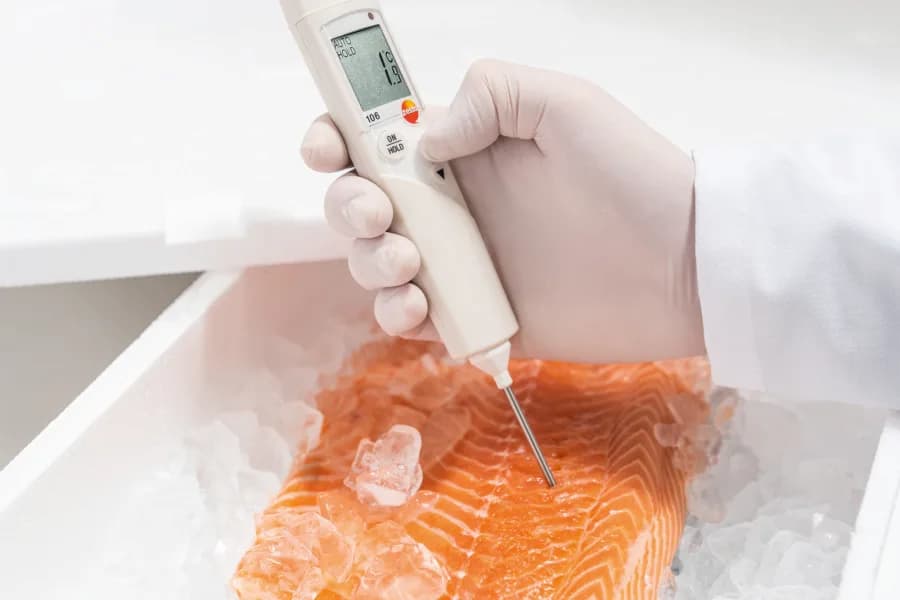
- Product temperature: The internal temperature of the food product.
- Air temperature: The temperature of the surrounding air.
- Core temperature: The temperature at the centre of the food product.
- Surface temperature: The temperature on the surface of the food.
Each type of temperature plays a significant role in maintaining food quality. Accurate measurement methods are essential to ensure compliance and safety.

Measuring temperatures in rooms
Temperature measurements in rooms can be affected by stratification, where surface temperatures differ significantly from air temperatures. To avoid errors:
- Maintain a minimum distance from surfaces during measurements.
- Choose measurement locations carefully.
- Use permanent probes in refrigerated rooms for consistent monitoring.
Stratification can also occur in static air between the floor and ceiling, especially in large storage areas. Control measurements should be taken at representative points identified through indoor climate surveys.
Air and product temperature monitoring
Refrigerated foods are cooled using cold air flows in facilities like freezer rooms. Monitoring both air and product temperatures ensures that the cooling process is effective and that food remains safe for consumption.
Best practices for cold chain temperature monitoring
- Use calibrated equipment for accurate readings.
- Conduct regular checks at critical points in the cold chain.
- Train staff on proper measurement techniques.
- Implement permanent monitoring systems in storage facilities.
